
• For more information on Green Party membership or to contact Green Party leadership, email [email protected] Join the Arlington Greens in person on Wednesday, June 1, 2022, at 7 PM in the community room of the Ballston Firehouse located at Wilson Blvd and George Mason Drive.

October 7, 2019

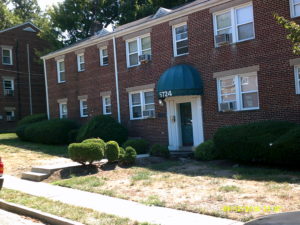
Arlington Judge Blocks Historic Preservation of Westover Apartments

Arlington Judge William Newman ruled against community efforts for historic preservation in Westover on September 29. We had asked him to require the county to complete our historic petition for Westover, but the judge says the county can take as many years or decades as it chooses to complete historic review even if all the buildings are lost. He dismissed our lawsuit without even a full hearing on the merits.

Judge Newman—a Democrat and former member of the county board himself— ruled that the county can delay forever in processing our historic petition forever. He did not even have the sense of justice to allow us to argue our case with evidence at a trial. He dismissed our case with prejudice (meaning we can never re-file).

He ruled that the county does not have to proceed at all on our historic petition which was filed about 3 ½ years ago. Since we filed our historic petition, four apartment buildings were demolished in addition to seven demolished before.
Digital Camera

It is ironic that Judge Newman is married to a billionaire and lives in a mansion on an estate in Middleburg Virginia worth many tens of millions of dollars, and ruled that it is okay for the county government to allow the demolition of 70-year old apartments that house renters who live on very small incomes. There is plenty of room in Arlington for millionaires and billionaires living in their big mansions, but no room for a disabled veteran, a school aide or a library technician getting by on under $50,000 a year.

It is a lousy and unfair justice and political system that values billionaires and developers over modest people living in Arlington. Justice deferred is justice denied. This is not justice.

We cannot appeal the judge’s egregious decision to the Virginia Supreme Court since this would cost us at least $15,000, and we can never recoup any of these legal fees even if we were to win our case. So our justice system works well for the rich and developers, but not for ordinary people in Arlington.

With our court case thrown out, we asked the county board itself to bypass the local historic review board and take up the matter itself and give us a final decision. But this is highly unlikely as the board is in league with developers who choose to demolish older and simpler homes and build new, bigger, more energy wasteful, and expensive homes for the rich. And we wonder why we have an affordable housing problem in Arlington.

We will continue as best we can to preserve Arlington along with modest apartments for middle and working income people in Arlington.
Tagged:

October 1, 2019

Arlington’s Energy Plan to reach zero carbon emissions based mostly on hot air and platitudes

Development,environment — @ 11:17 am

Arlington County Board of Supervisors on September 21, 2019 updated its six-year old Community Energy Plan (CEP), and increased its goal from a 75-percent reduction in carbon emissions within Arlington County by 2045 to net carbon neutrality by 2050. The actual policies needed to do this will be considered in a separate implementation policy in June 2020. So for now, the CEP is merely hopes and not concrete actions to be taken.

Why did the county only approve goals but not at the same time the means to achieve these goals? The plan has no funding nor new county ordinances or requirements. The plan calls for the county government to use only renewable power within 6 years, and all residents and business to use only renewable power by 2035.

The problem with that is that Virginia today has NO commercial renewable electricity. In 2018, about 3.1 million megawatts of electricity were consumed by commerce, residents, and government in Arlington. To supply that amount of electricity would take the electricity generated from the largest wind tower farm in the world (the London array with a daily capacity of 7,120 megawatts) for the +200,000 residents of Arlington.

Dominion Energy proposes to build a large wind farm off Virginia coast by 2026 with a capacity of 2,600 megawatts daily capacity that could supply only one-third of Arlington’s electricity use today.

It can argued that the 2013 CEP failed on nearly all of its goals, although some external and market driving factors did allow county emissions to drop slightly. A large proportion of existing office space became vacant during 2007-18, and Dominion Energy began phasing out coal-fired electricity for natural gas-fired electricity which produces less carbon emissions.

During 2010-18, net carbon emissions from buildings did drop by 4 percent or very close to the 2013 target of a 5-percent drop but only because of high rates of office vacancy. The bad news and more foreboding is that carbon emissions in residences rose by 14 percent, driven in part by a 9-percent increase in county residents.

The 2013 CEP failed owing to several factors: the State of Virginia Building code for new residential units was not strengthened to require builders to achieve a 30-percent energy savings. Secondly, no cogeneration power plants were built in Arlington that would have reduced commercial use of natural gas and electricity. Third, even the LEED certified buildings added in Arlington did not achieve significant energy savings.

Tagged:

Regenerative organic agriculture has potential to halt climate change

environment — @ 10:44 am

Jeff Moyer, Rodale Institute, Organic Broadcaster, Sept 2019

We can stop the climate crisis. At least, we can start reducing the 23% of global greenhouse gases that the United Nations Intergovernmental Panel on Climate Change recently attributed to agricultural activities.

The answer is regenerative organic agriculture. And the time to implement it is now. In a recent report, the UN said humans cannot stave off the effects of climate change without making drastic changes to how we grow food and use land. Conventional, industrial agriculture depends on chemical inputs and fossil-fuel intensive synthetic fertilizers, in addition to heavy machinery and tillage, to grow food. Industrial farming also relies on factory farms for animals. These methods release large amounts of carbon, methane, and other gases into the atmosphere.

In contrast, science proves that regenerative organic systems, which prioritize soil health and good farming practices like cover cropping, crop rotations, and pasturing animals, use 45% less energy and release 40% fewer carbon emissions than conventional agriculture, with no statistical difference in yields.

The Rodale Institute Farming Systems Trial was started in 1981 and is the longest side-by-side comparison of organic and conventional grain cropping systems in North America. We’ve collected data on soil health, crop yields, energy efficiency, and more through our research trials, which have led us to discover the implications of switching to an organic system. Rodale Institute and others have concluded that if we converted all global cropland and pastures to regenerative organic systems, we could sequester more than 100% of current annual CO2 emissions. As the UN report states, we don’t have time to wait.

Regenerative organic agriculture works with natural systems to produce nutritious and abundant food, instead of relying on synthetic inputs like pesticides and artificial fertilizers. Regenerative goes beyond sustainable to improve resources, not just maintain them. Regenerative organic agriculture utilizes strategies like organic no-till, which uses cover crops to return nutrients to the soil while absorbing carbon dioxide, reducing greenhouse gas emissions. Because the soil is not disturbed in organic no-till systems, the carbon dioxide absorbed by the cover crop is sequestered in the soil instead of released into the atmosphere.

Regenerative organic prioritizes soil health, but also considers animal welfare and social fairness in its standards. Regenerative organic livestock management emphasizes rotational grazing, grazing on grass, and no antibiotics or hormones, reducing the heavy burden livestock place on climate. But we don’t need regenerative organic agriculture only to mitigate the effects of climate change. We also need it in order to feed a world that’s already been shaped by a changing climate. As extreme weather events become more frequent, agricultural systems must become more resilient. Our research has found that organic crops have the potential to produce yields up to 40% higher in times of inclement weather—like flooding or drought—than conventional systems. This means that it is possible to feed the world while reducing carbon emissions.

Jeff Moyer is the executive director of Rodale Institute in Pennsylvania. He is the author of Organic No-Till Farming: Advancing No-Till Agriculture. https://mosesorganic.org/wp-content/uploads/2019/09/Broadcaster-Sept.-2019.pdf
Page 5 Page 7 Page 10 Page 9 - mosesorganic.org
Volume 27, #5 September | October 2019 Editor Audrey Alwell Advertising Coordinator Tom Manley Digital Content Producer their compass when things get rough. They can guide Stephanie Coffman The Organic BroadcasterTM is a bimonthly newspaper published by the Midwest Organic &
mosesorganic.org

Tagged: